SimpleLab: Laboratory Certifications Explained
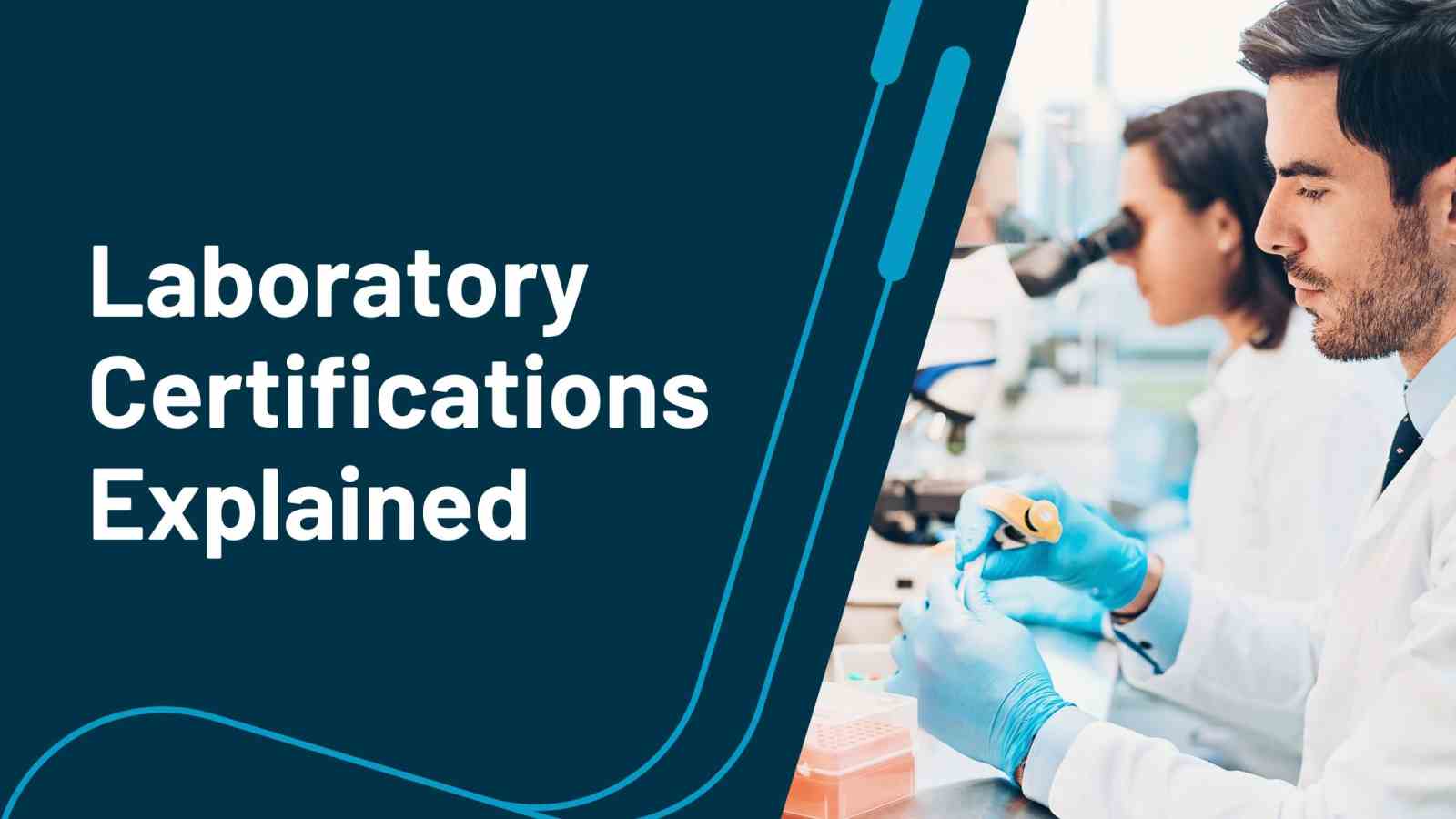
Laboratory certification in the environmental testing industry is both important and complex. Here, we provide an overview of how laboratory accreditation and certification work and how to confirm a laboratory facility’s current accreditation status.
Laboratory Certification and Accreditation
All SimpleLab testing services are powered by a network of laboratories accredited by various agencies and private bodies. All accreditations and certifications follow the same international standard, ISO 17025, to ensure laboratories have an acceptable quality management system in place.
ISO/IEC 17025 defines requirements for technical competence, impartiality, and consistency in laboratory operations, ensuring the accuracy and reliability of testing and calibration results.
Certifications can be on the national level or provided by various state agencies. Nearly all SimpleLab testing methods are based on published methods, including EPA, Standard Methods, ASTM, AOAC, NIOSH and other nationally recognized agencies and organizations. These published methods cover all types of matrices from water, soil, food, air, and building material.
All accrediting bodies use a combination of in-house or third-party auditors to review the laboratory’s quality systems to the ISO 17025 standard.
Environmental Laboratory Certification Bodies
There are two main sources of environmental laboratory certification in the United States: national level programs and state-specific laboratory certification programs (often referred to as ELAP programs). Unfortunately, there is no single certification program that applies to every state, so there are two main ways to look them up.
NELAC, NELAP, and TNI
The NELAC Institute (TNI) manages the National Environmental Laboratory Accreditation Program, or NELAP. The purpose of this program is to establish and implement a standardized system for accrediting environmental laboratories. Currently, 14 states participate in the NELAP program.
NELAP relies on consensus standards representing the best professional practices in the industry to establish requirements. These requirements are then implemented by state agencies recognized by TNI as Accreditation Bodies.
State Specific Certification
For the 36 remaining states, each state has its own agency responsible for certifications within that state. Some states only certify drinking water samples and nothing else, while other states might certify multiple matrices by one agency. In addition, some states even have two different agencies who do laboratory certification; one for drinking water and one for soil & wastewater, for example.
Other Laboratory Certifications: ISO, A2LA, PJLA, etc.
There are a handful of other national private certification companies which a lab may hold, including:
- American Association for Laboratory Accreditation (A2LA)
- American Industrial Hygiene Association (AIHA)
- Perry Johnson Laboratory Accreditation, Inc (PJLA)
There are also government run certification firms like the National Voluntary Laboratory Accreditation Program (NVLAP), which is specific to asbestos certification.
These third-parties act as both auditors of the laboratory’s quality systems and issuers of certifications and Fields of Testing to the ISO 17025 standard. In many cases, these third parties will also audit a laboratory on behalf of a state agency.
Each of these other accrediting agencies require maintaining rigorous standards and proficiency testing similar to NELAP in order to remain in good standing. SimpleLab laboratories also include many of these types of accredited facilities.
Questions? Contact Us

If you have questions about specific certification methods, or SimpleLab’s work with certified laboratories, please contact us (hello@gosimplelab.com) and we’ll be happy to provide further details.
Johnny is devoted to making environmental testing clearer, easier, and more accessible, from sample collection to results. He holds a Master’s in Engineering from UC Berkeley and a Bachelor’s in Economics from Boston University.
About SimpleLab
SimpleLab combines world-class laboratory science with customer service to ensure testing your environment is simple, fast and factual. Everything we do is driven by data and supported by a team of experts ready to answer your questions.